






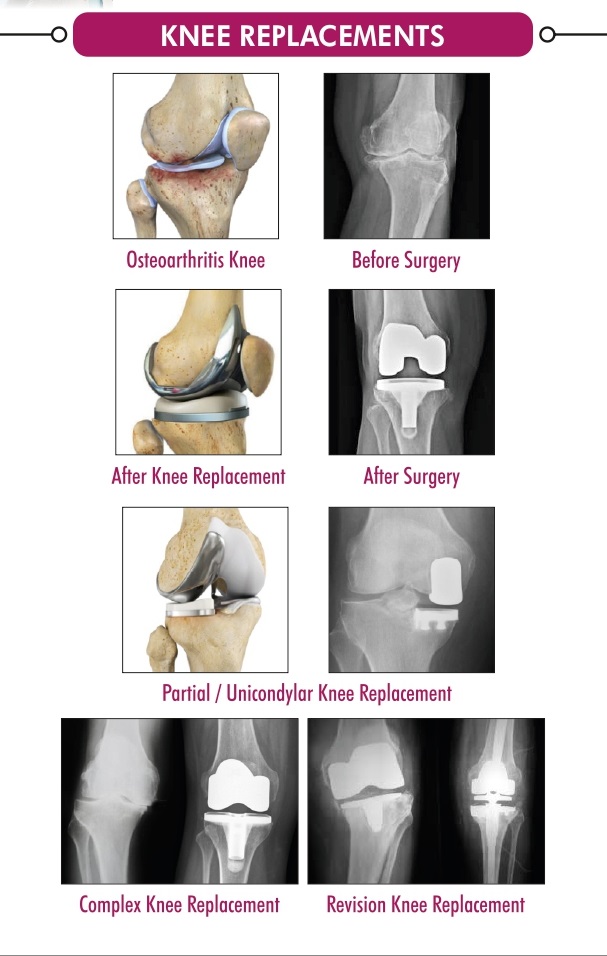
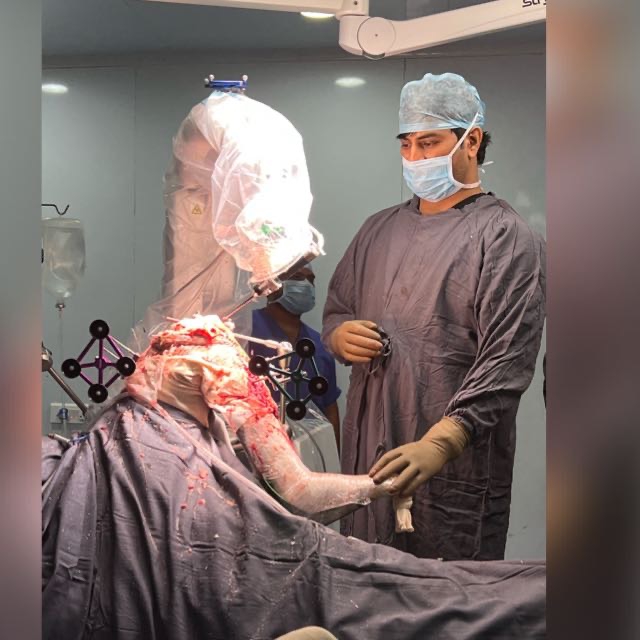
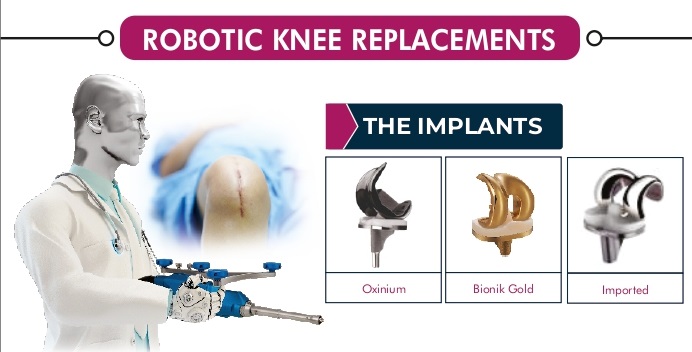
Robotic Knee Replacement Surgery
Robotic Knee Replacement Surgery, also known as Robot-Assisted Knee Replacement, is an advanced and highly precise procedure designed to relieve chronic knee pain and restore mobility in patients suffering from severe arthritis and joint degeneration.
In this innovative technique, the orthopedic surgeon utilizes a sophisticated robotic system to assist in planning and performing the surgery with exceptional accuracy. Before the procedure, a detailed 3D model of the patient’s knee is created, enabling personalized surgical planning based on the individual’s unique anatomy.
During surgery, the robotic technology provides real-time guidance, helping the surgeon accurately remove damaged bone and cartilage while preserving healthy tissue. This enhanced precision allows for optimal implant positioning, resulting in improved knee function and long-term outcomes.
Benefits of Robotic Knee Replacement Surgery
- Greater accuracy and precision in implant placement
- Personalized surgical planning for each patient
- Improved joint alignment and balance
- Smaller incisions and less tissue damage
- Reduced blood loss during surgery
- Less post-operative pain and discomfort
- Faster recovery and rehabilitation
- Shorter hospital stay
- Improved mobility and range of motion
- Enhanced longevity of the knee implant
- Higher patient satisfaction and better functional outcomes
Who Can Benefit from Robotic Knee Replacement?
Patients suffering from the following conditions may be suitable candidates for robotic knee replacement surgery:
- Advanced Osteoarthritis
- Rheumatoid Arthritis
- Post-traumatic Arthritis
- Severe Knee Pain Affecting Daily Activities
- Knee Deformities such as Bow Legs or Knock Knees
- Failure of Conservative Treatments including Medications, Injections, and Physiotherapy
Expert Robotic Joint Replacement Care
Dr. Rakesh Komuravelli is a renowned Senior Orthopedic Surgeon and Robotic Joint Replacement Specialist practicing at Fortis Hospitals, Lakdikapul, Hyderabad. He has received specialized training in robotic joint replacement surgery and is recognized for his expertise in primary and revision knee replacements.
With a commitment to clinical excellence and patient-centered care, Dr. Rakesh Komuravelli combines advanced robotic technology with extensive surgical experience to deliver outstanding outcomes, helping patients regain pain-free mobility and return to an active lifestyle.
Special Areas of Expertise
- Robotic Knee Replacement Surgery
- Revision Knee Replacement Surgery
- Hip Replacement Surgery
- Sports Injury Management
- Arthroscopy of Knee, Shoulder & Ankle
- Fractures & Complex Trauma Care
- Wound Management
- Deformity Correction Surgery
- Greater accuracy and precision in implant placement
- Personalized surgical planning for each patient
- Improved joint alignment and balance
- Smaller incisions and less tissue damage
- Reduced blood loss during surgery
- Less post-operative pain and discomfort
- Faster recovery and rehabilitation
- Shorter hospital stay
- Improved mobility and range of motion
- Enhanced longevity of the knee implant
- Higher patient satisfaction and better functional outcomes
Traditional knee replacement surgery is performed manually by the surgeon, while robotic knee replacement uses a computer-controlled robotic arm to assist in the placement and alignment of the new joint. This can result in greater accuracy and precision, as well as smaller incisions and less damage to surrounding tissue.
Candidates for robotic knee replacement are typically those who are experiencing pain and stiffness in the knee joint due to conditions such as arthritis, and have not found relief from other treatments. A doctor will evaluate each individual case to determine if robotic knee replacement is appropriate.
Benefits of robotic knee replacement include greater accuracy and precision in the placement of the new joint, smaller incisions, less damage to surrounding tissue, and potentially faster recovery times.
Recovery after robotic knee replacement surgery typically involves a period of physical therapy and rehabilitation to help restore strength and range of motion in the knee joint. Most patients are able to resume normal activities within a few weeks to a few months following surgery.
As with any surgical procedure, there are risks associated with robotic knee replacement surgery, including infection, blood clots, nerve damage, and allergic reaction to anesthesia. However, the use of robotic technology may help to minimize these risks.
The longevity of a robotic knee replacement can vary depending on a number of factors, including the patient’s age, activity level, and overall health. However, most artificial knee joints last between 20 and 30 years before requiring replacement.