





 Why Does an ACL Injury Happen? Causes, Symptoms & When to See an Orthopedic Surgeon
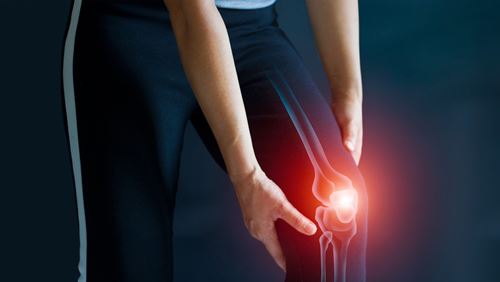
The Anterior Cruciate Ligament (ACL) is one of the most important ligaments in the knee, helping maintain stability during walking, running, jumping, and sudden changes in direction. ACL injuries are common among athletes, fitness enthusiasts, and even individuals performing everyday activities.
What Causes an ACL Injury?
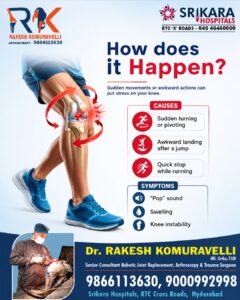
An ACL tear usually occurs when the knee is subjected to sudden twisting or excessive force. Common causes include:
🔴 Sudden Turning or Pivoting
Rapid changes in direction can place significant stress on the ACL, leading to injury.
🔴 Awkward Landing After a Jump
Landing incorrectly after jumping can strain the knee joint and damage the ligament.
🔴 Quick Stops While Running
Sudden deceleration during sports or physical activity can increase the risk of an ACL tear.
Common Symptoms of an ACL Tear
If you experience any of the following symptoms, you may have injured your ACL:
✔️ A distinct “pop” sound at the time of injury
✔️ Swelling around the knee within a few hours
✔️ Feeling of knee instability or the knee “giving way”
✔️ Difficulty walking or bearing weight
✔️ Reduced range of motion
Who Is at Risk?
ACL injuries are more common among:
- Athletes participating in football, cricket, basketball, badminton, and volleyball
- Runners and fitness enthusiasts
- Individuals involved in activities requiring sudden direction changes
- People with previous knee injuries
Why Early Diagnosis Matters
Ignoring knee pain or instability can lead to further damage to the meniscus, cartilage, and surrounding structures. Early evaluation by an orthopedic specialist helps determine the extent of the injury and allows timely treatment.
Treatment Options for ACL Injuries
Treatment depends on the severity of the injury, age, activity level, and lifestyle goals. Options may include:
✅ Rest, ice, compression, and elevation (RICE)
✅ Physiotherapy and rehabilitation
✅ Bracing and activity modification
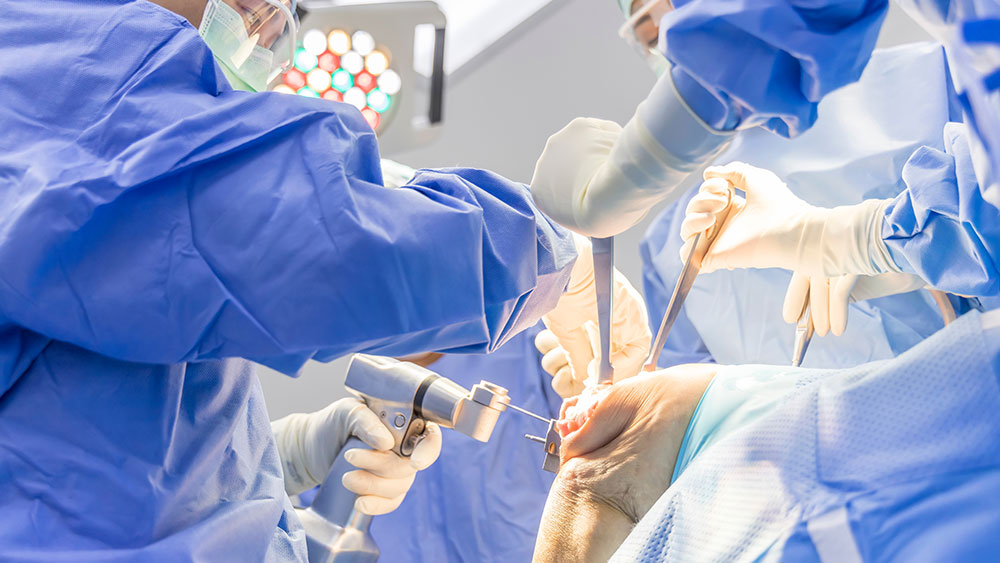
✅ Arthroscopic ACL Reconstruction Surgery for complete tears and active individuals
Modern arthroscopic techniques enable faster recovery, smaller incisions, and improved outcomes.
Consult an Expert Orthopedic Surgeon
If you experience knee pain, swelling, instability, or hear a “pop” during activity, don’t ignore the symptoms. Early treatment can help restore knee function and prevent long-term complications.
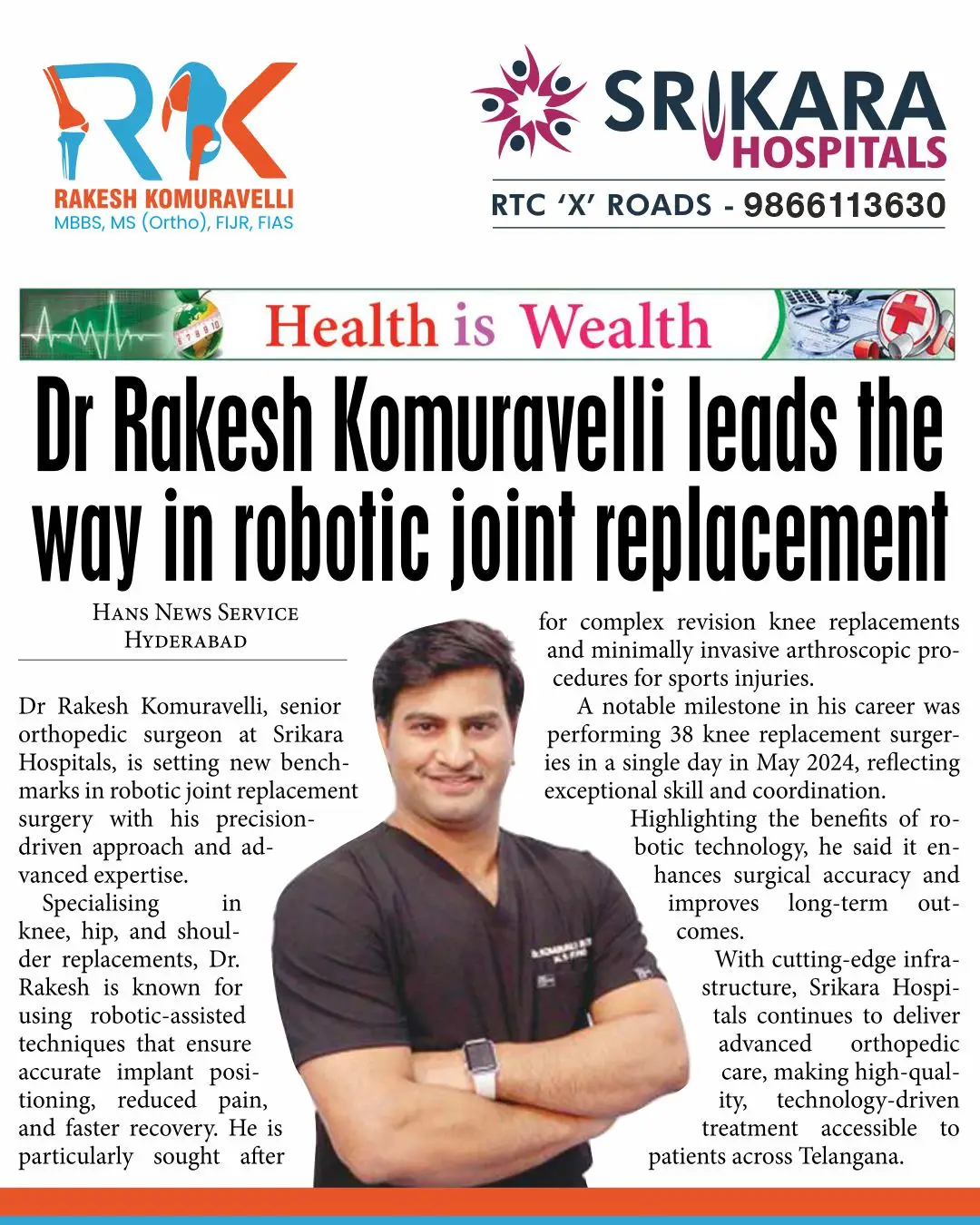
Dr. Rakesh Komuravelli
Senior Consultant Robotic Joint Replacement, Arthroscopy & Trauma Surgeon
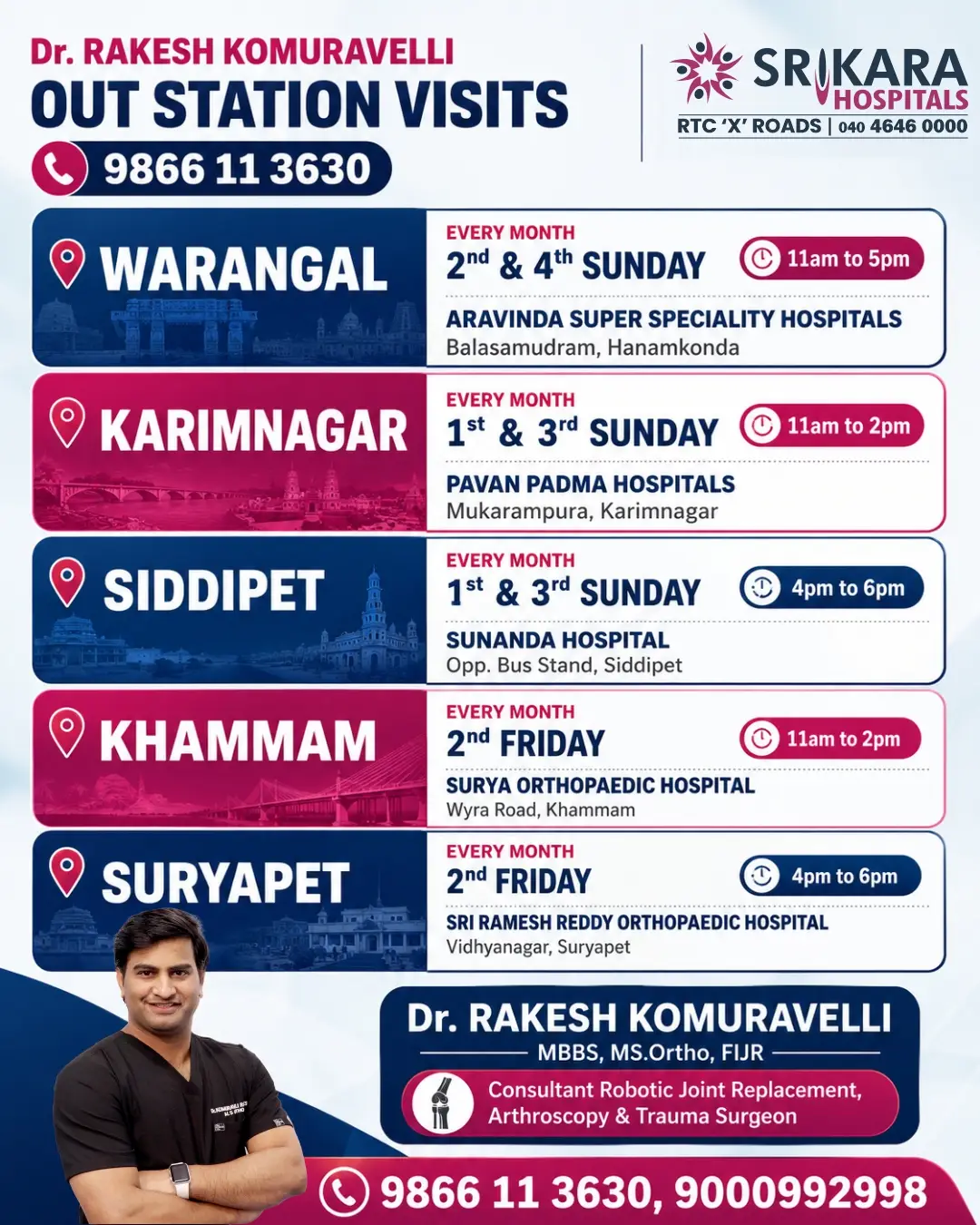
Srikara Hospitals, RTC Cross Roads, Hyderabad